Not every home sale needs to begin with professional photos, an MLS listing, and weeks of showings.We recently helped a seller successfully close on a condo in the Villas Del Sol community in,

Dated: August 15 2026
Views: 84
Understanding the Process, Your Options, and What to Expect
If you owe more on your mortgage than your home is currently worth, you may be wondering what options are available. One possibility is a short sale.
While the term is familiar to many homeowners, the process itself is often misunderstood. A short sale involves several parties, requires lender approval, and can take longer than a traditional home sale. However, for some homeowners, it may provide an alternative to foreclosure while allowing them to move forward.
Every homeowner's situation is unique. This guide explains how short sales generally work in Florida and what you can expect throughout the process.
A short sale occurs when a mortgage lender or servicer agrees to allow a property to be sold for less than the amount owed on the mortgage.
Unlike a traditional home sale, lender approval is required before the short sale can close.
Although the property is listed and marketed like any other home, the lender reviews the purchase offer and supporting documentation before deciding whether to approve the transaction and under what terms.
A short sale may be considered when a homeowner is experiencing financial hardship and the home's current market value is insufficient to cover the mortgage balance and the costs associated with selling the property.
Circumstances that may lead a homeowner to explore a short sale can include:
Every homeowner's circumstances and loan requirements are different, and short sale approval is not guaranteed.
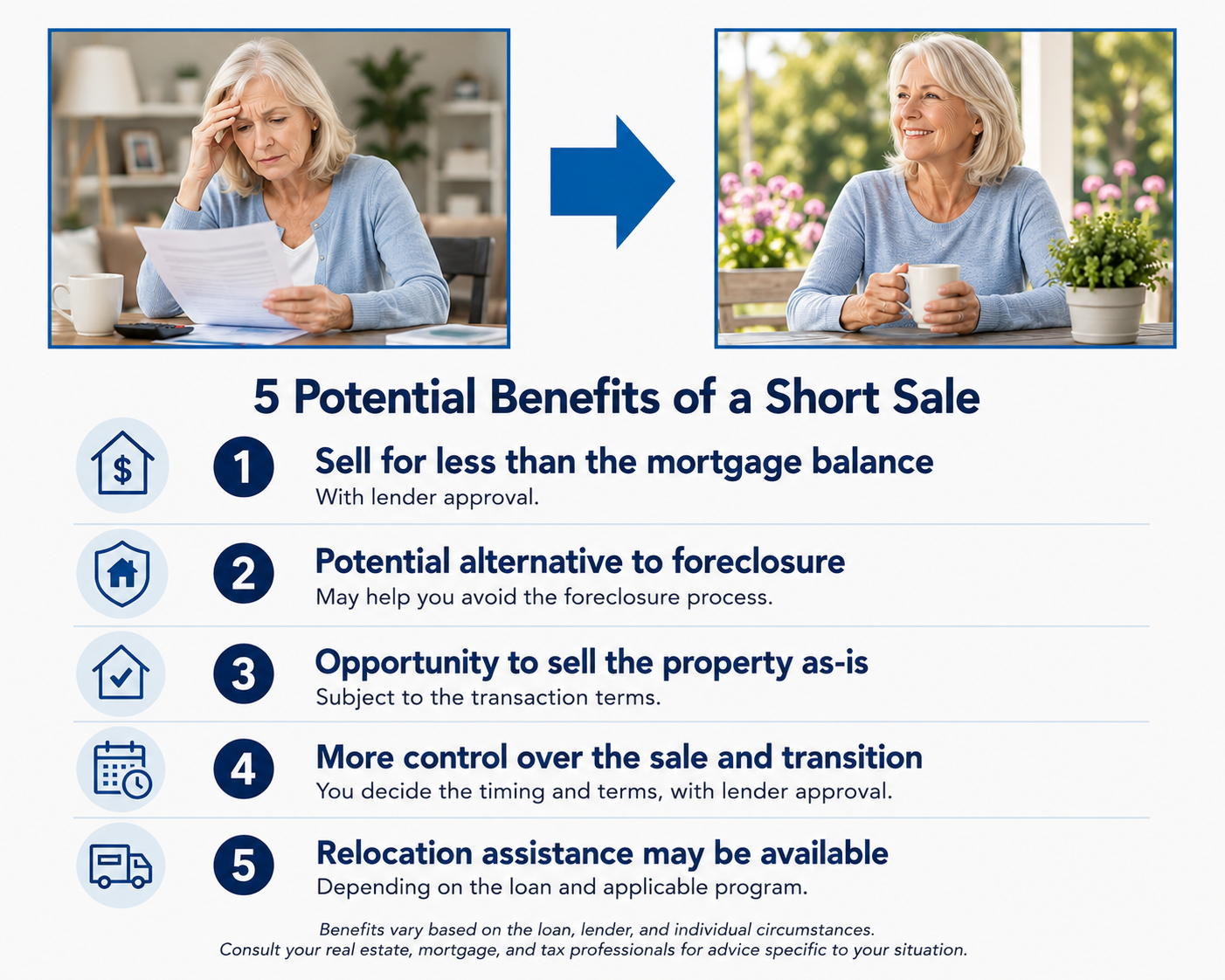
Although every lender has its own requirements, the process generally follows these steps.
The first step is understanding the homeowner's situation, reviewing the property's estimated value, and determining whether a traditional sale is possible or a short sale may be an appropriate option.
A comparative market analysis is prepared to help determine a realistic listing price based on current market conditions and the property's condition.
The lender typically requires financial and other documentation from the homeowner, which may include:
• Hardship information or a hardship letter
• Income documentation
• Tax returns
• Bank statements
• Mortgage and property information
• Other supporting financial information
Requirements vary depending on the lender, loan, and individual circumstances.
The property is professionally marketed much like a traditional home sale while identifying that the transaction is subject to lender approval.
Once an acceptable offer is received, the purchase contract and required documentation are submitted to the lender as part of the complete short sale package.
During the review process, the lender may evaluate:
• The purchase offer
• Property value
• Homeowner documentation
• Investor or loan guidelines
• Proposed proceeds and costs associated with the sale
Additional documentation, property valuations, negotiations, or changes to the proposed terms may be required during this stage.
If the short sale is approved, the lender provides written approval outlining the terms and conditions under which the transaction may close.
Once the required conditions are satisfied, the transaction can proceed toward closing.
Reality: A short sale is one potential alternative that may allow a homeowner to sell the property before a foreclosure is completed, subject to lender approval and the circumstances of the loan.
Reality: Not necessarily. Every lender, loan, and homeowner situation is different. Whether a homeowner is current or behind on mortgage payments is one of several factors that may be considered.
Reality: Short sale approval depends on the lender's review of the transaction, property value, required documentation, and applicable loan or investor guidelines.
Reality: There is no standard timeline. The process can vary significantly depending on the lender, documentation, property valuation, negotiations, and complexity of the transaction.
A short sale involves more than simply listing and selling a property. It requires coordination among several parties, including:
Each party has a different role, and lender requirements can change as the transaction progresses. Clear communication and timely documentation are important to keeping the process moving toward lender approval and closing.
Dennis & Lorna Raffeo partner with Loan Mitigation Services (LMS), an experienced third-party short sale specialist, to help facilitate the short sale process from listing through closing.
Our role is to manage the real estate transaction, market the property, communicate with the parties involved, and help our clients understand what is happening at each stage. The loss mitigation specialists focus on lender documentation and the short sale approval process.
This collaborative approach combines local real estate experience with specialized loss mitigation support, providing homeowners with clear communication, realistic expectations, and professional guidance throughout the transaction.
Not necessarily. The lender's written approval determines the specific terms of the transaction, including how any remaining balance may be handled. Homeowners should carefully review the approval terms and seek legal or tax advice when appropriate.
Possibly. Every situation is different, and lender approval is required for a short sale. Being behind on payments does not by itself determine whether a short sale will be approved.
There is no standard timeline. Some transactions move more quickly than others, while others require additional lender review, documentation, property valuations, or negotiations.
Future mortgage eligibility depends on the loan program, lender requirements, and individual financial circumstances. A qualified mortgage professional can explain the requirements that apply to a particular situation.
No. A short sale is a sale of the property for less than the mortgage balance that requires lender approval. Foreclosure is a separate legal process through which a lender may seek to recover property after a borrower defaults on the loan.
If you're facing financial circumstances that may make a traditional home sale difficult, understanding your options early can help you make a more informed decision.
A short sale may be one option, but every homeowner's situation, mortgage, property value, and lender requirements are different. An initial conversation can help determine whether a traditional sale is possible, whether a short sale may be appropriate, and what the next steps could look like.
Dennis & Lorna Raffeo help homeowners throughout The Villages and Central Florida navigate traditional sales and more complex real estate transactions. When a short sale is appropriate, we partner with experienced loss mitigation specialists to help facilitate the process from listing through lender approval and closing.
If you have questions about your property or would like to understand your options better, we're available for a confidential, no-pressure conversation.

Dennis & Lorna Raffeo, REALTORS® - The Villages, FL Real Estate SpecialistsTrusted REALTORS® Serving The Villages, FL & Central FloridaHelping buyers and sellers throughout The Village....
Not every home sale needs to begin with professional photos, an MLS listing, and weeks of showings.We recently helped a seller successfully close on a condo in the Villas Del Sol community in,
Understanding the Process, Your Options, and What to ExpectIf you owe more on your mortgage than your home is currently worth, you may be wondering what options are available. One possibility is a
This Ranch-style home in the Village of Buttonwood, The Villages, FL sold in November 2024, with Dennis & Lorna Raffeo representing the seller.📍 2489 Buttonwood Run, The Villages, FL🏡
This Patio Villa in the Village of Piedmont, The Villages, FL was purchased in August 2025, with Dennis & Lorna Raffeo representing the buyer.📍 17479 SE 82nd Pecan Ter, The Villages, FLðŸ
 Copyright © MFRMLS.com All information deemed reliable but not guaranteed. All properties are subject to prior sale, change or withdrawal. Neither listing broker(s) or information provider(s) shall be responsible for any typographical errors, misinformation, misprints and shall be held totally harmless. Listing(s) information is provided for consumers personal, non-commercial use and may not be used for any purpose other than to identify prospective properties consumers may be interested in purchasing. Information on this site was last updated Last updated on September 23, 2026 6:19 PM UTC The listing information on this page last changed on Last updated on September 23, 2026 6:19 PM UTCd. The data relating to real estate for sale on this website comes in part from the Internet Data Exchange program of MFR MLS.
All information deemed reliable but not guaranteed. All properties are subject to prior sale, change or withdrawal. Neither listing broker(s) or information provider(s) shall be responsible for any typographical errors, misinformation, misprints and shall be held totally harmless. Listing(s) information is provided for consumers personal, non-commercial use and may not be used for any purpose other than to identify prospective properties consumers may be interested in purchasing.
Updated on September 23, 2026 6:19 PM UTC
Copyright © MFRMLS.com All information deemed reliable but not guaranteed. All properties are subject to prior sale, change or withdrawal. Neither listing broker(s) or information provider(s) shall be responsible for any typographical errors, misinformation, misprints and shall be held totally harmless. Listing(s) information is provided for consumers personal, non-commercial use and may not be used for any purpose other than to identify prospective properties consumers may be interested in purchasing. Information on this site was last updated Last updated on September 23, 2026 6:19 PM UTC The listing information on this page last changed on Last updated on September 23, 2026 6:19 PM UTCd. The data relating to real estate for sale on this website comes in part from the Internet Data Exchange program of MFR MLS.
All information deemed reliable but not guaranteed. All properties are subject to prior sale, change or withdrawal. Neither listing broker(s) or information provider(s) shall be responsible for any typographical errors, misinformation, misprints and shall be held totally harmless. Listing(s) information is provided for consumers personal, non-commercial use and may not be used for any purpose other than to identify prospective properties consumers may be interested in purchasing.
Updated on September 23, 2026 6:19 PM UTC
33. Required DMCA Notice
The Digital Millennium Copyright Act of 1998, 17 U.S.C. §512, the DMCA, provides recourse for copyright owners who believe that material appearing on the Internet infringes their rights under U.S. copyright law. If you believe in good faith that any content or material made available in connection with our website or services infringes your copyright, you (or your agent) may send us a notice requesting that the content or material be removed, or access to it blocked. Notices must be sent in writing by email to DMCAnotice@MLSGrid.com. The DMCA requires that your notice of alleged copyright infringement include the following information: (1) description of the copyrighted work that is the subject of claimed infringement; (2) description of the alleged infringing content and information sufficient to permit us to locate the content; (3) contact information for you, including your address, telephone number and email address; (4) a statement by you that you have a good faith belief that the content in the manner complained of is not authorized by the copyright owner, or its agent, or by the operation of any law; (5) a statement by you, signed under penalty of perjury, that the information in the notification is accurate and that you have the authority to enforce the copyrights that are claimed to be infringed; and (6) a physical or electronic signature of the copyright owner or a person authorized to act on the copyright owners behalf. Failure to include all of the above information may result in the delay of the processing of your complaint.
